Laparoscopic Hernia Repair
Keyhole repair of a hernia, reinforcing the abdominal wall with mesh through small cuts.
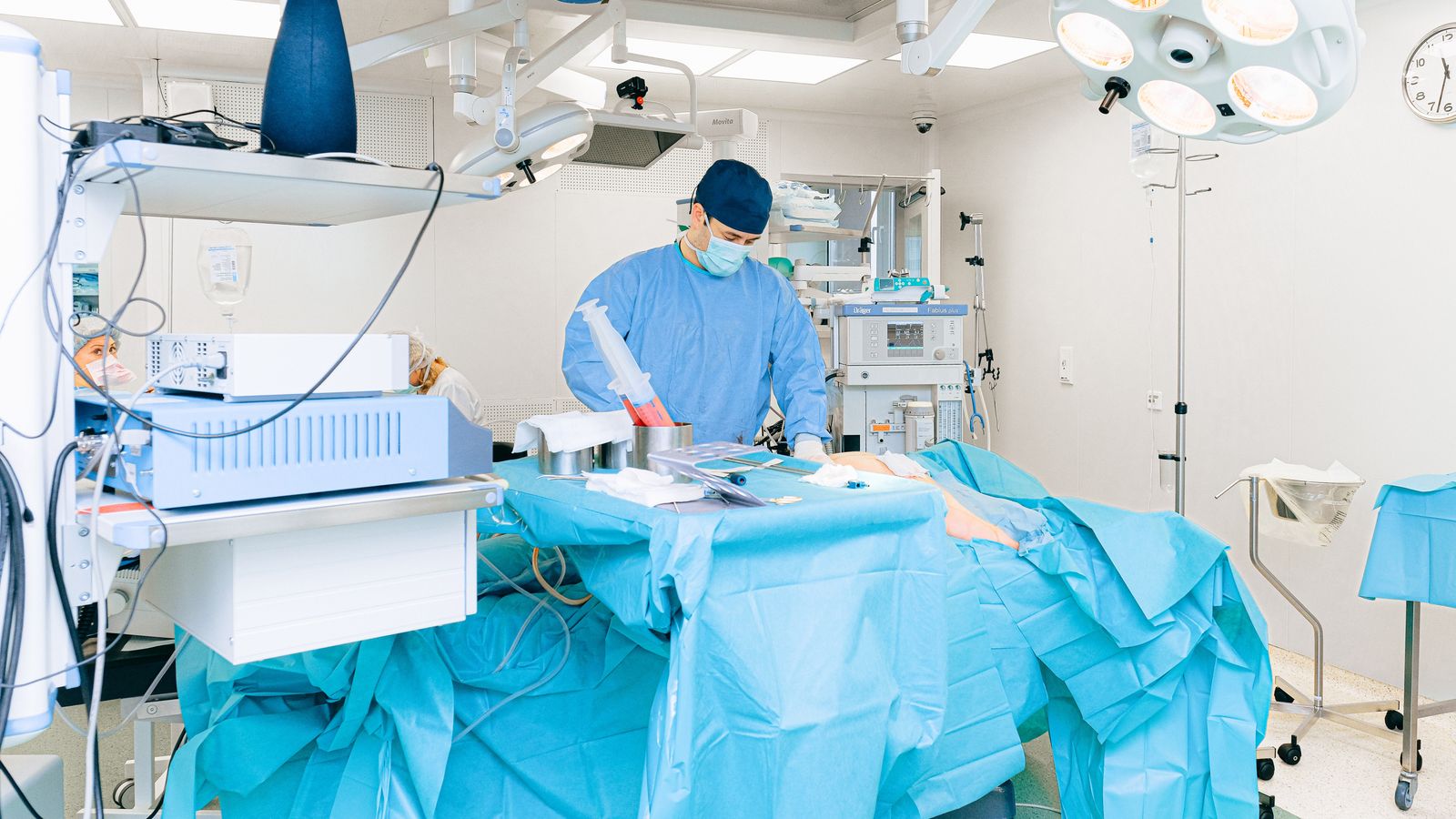
Laparoscopic hernia repair is keyhole surgery to fix a hernia through a few small incisions using a camera and fine instruments. The weak area of the abdominal wall is reinforced from the inside with a soft mesh, greatly lowering the risk of recurrence. Compared with open repair it often means less pain and a faster return to activity.
Laparoscopic hernia repair is a minimally invasive way to fix hernias of the groin and abdominal wall. Instead of a single larger incision, the surgeon works through a few small cuts and reinforces the weak spot with mesh from the inside. For many patients this means less pain and a quicker return to work — especially with hernias on both sides or those that have come back. Dr. Sujan Shrestha performs keyhole hernia repair as part of his minimally invasive practice.
ल्यापरोस्कोपिक हर्निया रिपेयर भनेको साना प्वालबाट क्यामेरा प्रयोग गरी हर्निया मिलाई पेटको भित्तालाई जाली (मेस)ले बलियो बनाउने किहोल शल्यक्रिया हो, जसमा कम दुखाइ र छिटो निको हुन्छ।
Overview
Overview. A hernia occurs when tissue pushes through a weak point in the abdominal wall. In laparoscopic repair, the surgeon operates through three small ports using a camera (laparoscope) and fine instruments. The hernia contents are returned to the abdomen and a soft mesh is positioned to cover and strengthen the defect from behind the muscle, so pressure inside the abdomen holds the mesh firmly in place.
This approach is used for inguinal (groin), umbilical and many incisional hernias. Because the mesh reinforces a wide area of the wall, recurrence is uncommon, and the small incisions cause far less disturbance to the tissues than an open operation.
Conditions it treats
- Inguinal (groin) hernias, including on both sides
- Recurrent hernias after previous open repair
- Umbilical and paraumbilical hernias
- Many incisional (post-surgical) hernias
- Femoral hernias low in the groin
Key benefits
- Only a few small incisions instead of one larger cut
- Less post-operative pain than open repair for many patients
- Ideal for repairing hernias on both sides in one operation
- A good option for recurrent hernias, approaching from fresh tissue planes
- Faster return to work and normal activity
- Lower risk of wound infection and smaller, less visible scars
- Mesh reinforcement that keeps recurrence uncommon
How the procedure is performed
The operation is done under general anaesthesia. The abdomen is inflated with carbon dioxide to create space, and a laparoscope is inserted through a small cut, usually near the navel. Through two further small ports, the surgeon returns the hernia contents to the abdomen and exposes the weak area of the wall.
A soft mesh is then placed over the defect and secured so that it reinforces the whole region. Once the repair is complete, the gas is released and the tiny incisions are closed. The procedure commonly takes around 30–60 minutes depending on the hernia. If the surgeon judges it safer — for example with dense scarring — the operation may occasionally be converted to open repair in the patient's best interest.
Preparing for surgery
Before surgery you will have routine blood tests and an assessment of your fitness for anaesthesia; imaging such as ultrasound or CT may be used for larger or recurrent hernias. You will usually fast for about six hours beforehand. Tell your surgeon about all medicines, especially blood thinners, and about diabetes, cough or other conditions so your care can be planned safely.
Recovery & aftercare
Laparoscopic hernia repair is often a day-care or single-night procedure. You can walk the same day, and many people with desk jobs return to work within about a week. Mild discomfort and shoulder-tip pain from the gas settle within a day or two. Heavy lifting and strenuous exercise are usually avoided for a few weeks while the mesh integrates and the tissues heal fully.
Risks & considerations
- Minor bleeding or bruising around the groin or port sites
- Fluid collection (seroma) at the repair, which usually settles on its own
- Wound or mesh infection (uncommon)
- Temporary groin or shoulder-tip discomfort
- Injury to nearby structures such as bowel, vessels or bladder (rare)
- A small chance of recurrence or of conversion to open surgery
Frequently asked questions
Neither is universally better — it depends on the hernia and the patient. Keyhole repair is particularly useful for hernias on both sides and for recurrent hernias, and often means less pain and a quicker recovery. Your surgeon will recommend the best approach.
Yes. The soft mesh is designed to stay in place permanently and become incorporated into your own tissue, providing strong, lasting reinforcement. It greatly reduces the chance of the hernia returning.
Many people with desk jobs return within about a week. Heavy lifting and strenuous exercise are usually avoided for a few weeks. Your surgeon will give advice tailored to your job and recovery.
Most patients have only mild discomfort, controlled with simple painkillers, which eases within a few days. Some feel temporary shoulder-tip pain from the gas used during surgery.
Recurrence is uncommon thanks to the mesh reinforcement. Following post-operative advice — avoiding early heavy lifting and treating cough or constipation — further lowers the small risk of it returning.
Get a clear answer from a specialist
Dr. Sujan Shrestha (MBBS, MS, MCh) offers evidence-based, minimally invasive care for laparoscopic hernia repair and the full range of GI conditions.